
Lee County arrest warrants refer to court-issued legal orders that allow law enforcement to detain a person linked to a criminal case. An arrest warrant Lee County record is created after judicial approval based on probable cause and becomes part of the official legal records system. These records support tracking of criminal proceedings within county judicial documentation and enforcement databases.
Lee County arrest warrants are maintained within structured public records and law enforcement databases tied to the county arrest system. These warrant records may include case details, issuance status, and enforcement updates as part of ongoing legal records management. They often reflect changes in case movement, including active enforcement entries and court-reviewed status updates.
What is a Court-Issued Warrant in Lee County?
A court-issued warrant in Lee County is a written order from a judge https://www.sheriffleefl.org/ that allows police or deputies to take legal action. Most commonly, it refers to an arrest warrant Lee County law enforcement uses to detain a person named in the order. A warrant is issued only after a formal request from law enforcement. The judge reviews the facts and signs it when legal requirements are met.

Points:
- Issued through the judge’s authorization
- Based on probable cause
- Linked to a specific person or case
- Used for arrest or legal action
- Stored in official court records
Each warrant includes details like identity, alleged offense, and court information.
Legal Basis: Fourth Amendment & Florida Law
Warrants in Lee County follow the Fourth Amendment and Florida statutes. These laws control when a warrant can be issued. The Fourth Amendment protects people from unlawful arrest or search. It requires valid evidence before any court-issued warrant is approved. Florida law also requires judges to confirm probable cause, meaning a reasonable belief that a crime occurred.
Legal foundation:
| Legal Source | Purpose |
|---|---|
| Fourth Amendment | Prevents unlawful search and arrest |
| Florida statutes | Sets warrant procedures |
| Judge authorization | Approves legal request |
| Probable cause | Justifies issuance |
Without these legal steps, a warrant cannot move forward.
Why Warrants Are Issued
A warrant is issued when evidence shows possible criminal activity or court violations. Law enforcement submits facts, and a judge reviews them.
Reasons include:
- Missed court appearance
- Criminal suspicion
- Probation violation
- Active investigation evidence
- Court order violations
Types of warrants in Lee County:
- Arrest warrant – authorizes detention
- Bench warrant – for missed court dates
- Search warrant – allows evidence search
Each type serves a different legal purpose but always requires a judge’s approval and probable cause.
Steps: Search Process
People can perform a Lee County arrest search through official record systems that support name, date, and booking number inputs. The search arrest Lee County process connects user-entered details with the county inmate lookup system to show custody status and booking data. Results depend on the correct input format, timing of updates, and record availability within the system database.
How Name Search Works in Lee County Arrest Search
A name search remains the most common method used in the inmate lookup system https://www.sheriffleefl.org/wanted-fugitives/. It works by matching a person’s full or partial name with arrest and booking records stored in county databases.
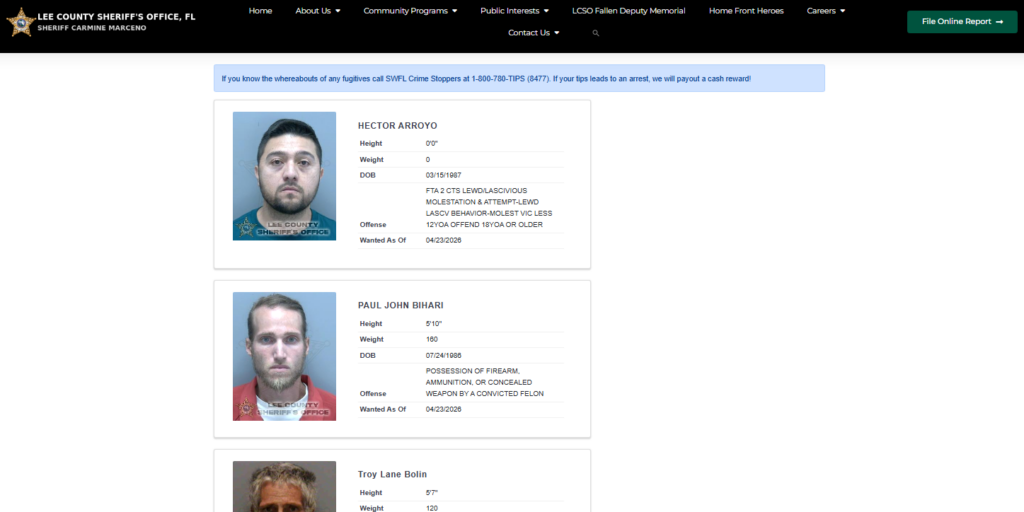
Users typically enter:
- First name
- Last name
- Middle initial (if available)
After submission, the system returns possible matches linked to arrest records, custody status, and facility location. If multiple matches appear, users compare age, gender, or booking details for clarity.
Search results may include:
- Arrest date
- Charges listed at intake
- Current custody status
- Booking number reference
Name-based searches may return incomplete results if spelling differs or aliases were used during arrest processing. Even small variations in spelling can affect record matching.
Search by Date in Lee County Arrest Records
A date-based search helps narrow down arrest activity within a specific timeframe. This method is useful when the exact name is not known or when reviewing recent detention activity.
Users usually input:
- Arrest date (single day)
- Date range (start and end dates)
The system then lists all bookings recorded during that period. Each entry connects to inmate profiles through the inmate lookup system.
Common date search outputs include:
- Booking intake time
- Arrest location
- The agency responsible for the arrest
- Charges filed at the time of booking
| Search Type | Input Required | Typical Result |
|---|---|---|
| Single Date | One specific day | Daily arrest list |
| Date Range | Start + end dates | Multiple records |
| Recent Arrests | Last 24–72 hours | Updated booking feed |
Date searches work best for tracking trends or verifying recent custody events in Lee County records.
How Booking Numbers Work in the Inmate Lookup System
A booking number is a unique identifier assigned during arrest processing. It acts like a tracking code inside the inmate lookup system, linking all records tied to one arrest event.
Each booking number connects to:
- Mugshot record
- Charges filed
- Bond details
- Court appearance notes
Unlike name search, booking number search returns a single exact record. This reduces confusion caused by similar names or duplicate entries.
Sheriff Records & Data Sources
Arrest search Lee County, Florida results come from official sheriff records stored inside a law enforcement database. These records are built from the official booking system used during arrests, intake, and jail processing. Data shown in public searches usually reflects what the sheriff’s office records at the time of processing. However, timing and reporting differences can affect what appears online.
Where Sheriff Records Come From
Sheriff records in Lee County start at the point of arrest. Deputies record each event during intake and booking at the detention facility. This information flows into the official booking system, which updates jail logs and inmate records.
Data sources include:
- Arrest reports filed by deputies in the field
- Booking details recorded at the jail facility
- Charges entered during intake processing
- Court-related updates tied to custody status
- Release logs and bond activity
This data is stored in a centralized law enforcement database managed by the sheriff’s office. It helps track custody status, charge history, and booking timestamps.
Sheriff Office vs Third-Party Websites
The sheriff’s office database is the primary source of arrest records. Third-party websites often collect and republish this data for public viewing.
A clear difference exists between the two sources:
| Source Type | Data Origin | Update Speed | Reliability |
|---|---|---|---|
| Sheriff Office Records | Official booking system | Faster updates | High |
| Third-Party Sites | Scraped or imported data | Delayed updates | Medium to low |
Sheriff’s office records show direct entries from deputies and jail staff. These records reflect current custody and booking status more accurately.
Accuracy Limits in Arrest Search Data
Even official sheriff records may have small delays or gaps. Updates depend on how quickly staff enter new information into the booking system.
Common accuracy limits include:
- Processing delay: New arrests may take time to appear
- Charge changes: Court updates may not reflect instantly
- Release timing: Early releases may not update immediately
- Data entry errors: Human input can create minor mistakes
Third-party sites add another layer of delay since they pull data in batches. This can lead to differences between what users see online and what the sheriff’s office shows.
Free Warrant Search Lee County
A free warrant lookup in Lee County can be done through official government databases, public records portals, and in-person search terminals. Many records are available at no cost under the public records law, though some details may require formal requests. Finding active warrants without paying starts with trusted sources. Lee County follows public records law principles, which allow people to check many law enforcement records for free. These systems pull data from a government database, often maintained by the sheriff’s office or court system.
Where Free Warrant Searches Come From
Warrant data is collected and stored by local authorities. This includes arrest warrants issued by judges based on probable cause. The most reliable sources include:
- Sheriff’s Office Records: Maintains active warrant lists and booking logs
- County Court Systems: Stores court-issued warrants and case updates
- Clerk of Court Portals: Offers searchable case records linked to warrants
- Law Enforcement Databases: Central systems that update arrest status
These sources reflect official records, which makes them more accurate than third-party sites.
How to Run a Free Warrant Lookup
There are several ways to search without paying fees. Each method works for different needs:
Online Public Records Search:
Many counties provide digital lookup tools. Users can search by:
- Full name
- Case number
- Date of birth
Free Access Terminals:
Public terminals are often available at:
- County courthouses
- Clerk offices
- Law enforcement buildings
These systems allow deeper searches that may not appear online.
FOIA Request:
If records are not online, a formal request can be submitted. This process may include:
- Filling out a request form
- Providing identifying details
- Waiting for processing (often a few days)
What Information Is Included
A typical Lee County arrest warrants search free result may show:
| Record Detail | Description |
|---|---|
| Name | Person linked to the warrant |
| Charge | Reason for the warrant |
| Case Number | Court reference ID |
| Issuing Authority | Judge or court |
| Status | Active, cleared, or served |
Some sensitive details may be limited for privacy reasons.
Who Issues Warrants in Lee County
A court-issued warrant in Lee County is approved by a judge or magistrate who has legal authority to review evidence and confirm probable cause. Most arrest warrant Lee County cases move through the 20th Judicial Circuit, where judicial officers review requests from law enforcement and prosecutors. Warrants are not created by police alone. Instead, they require approval from the court system. This process protects rights and keeps law enforcement actions within legal limits.
Role of Judge Authority in Warrant Approval
A warrant becomes valid only after a judge or magistrate signs it. This step confirms that enough evidence supports the request. The judge reviews sworn statements, often called affidavits, submitted by officers.
Responsibilities of judge authority include:
- Reviewing probable cause evidence
- Confirming legal standards are met
- Signing and issuing the warrant
- Setting conditions, such as bail or arrest scope
In Lee County, these actions take place within the 20th judicial circuit, which handles criminal cases and warrant approvals.
How Law Enforcement and Prosecutors Request Warrants
Before a warrant is issued, law enforcement prepares a detailed report. This report explains the alleged crime and includes evidence. The request often goes through the state attorney’s office, which reviews the case for legal strength.
The process usually follows these steps:
- Police gather evidence and prepare an affidavit
- The state attorney’s office reviews the case
- A judge or magistrate evaluates the request
- The warrant is approved or denied
This system helps prevent errors and supports fair legal action.
Types of Warrants Issued in Lee County
Courts in Lee County issue several types of warrants. Each serves a different purpose in the legal process.
| Warrant Type | Purpose |
|---|---|
| Arrest Warrant | Authorizes police to detain a person |
| Bench Warrant | Issued for missed court appearances |
| Search Warrant | Allows property searches for evidence |
| Capias Warrant | Enforces court orders or unpaid fines |
Each type still requires judicial approval before it becomes active.
Public Records and Warrant Transparency
Warrants often appear in public records systems after issuance. These records follow the public records law, which allows limited public viewing. People can check warrant details through:
- Government database systems
- Clerk of court records
- Free access terminals at public offices
- FOIA request submissions for deeper records
These options help confirm if a warrant exists and show its current status.
How Long Do Warrants Last?
Most active warrants in Lee County stay valid with indefinite validity and do not expire on their own. They remain in place until the court cancels them, the person appears in court, or law enforcement completes the arrest. Warrants are legal orders signed by a judge. Once issued, they stay active in the system and allow legal enforcement at any time. This applies to both serious charges and minor violations.
Do Warrants Ever Expire?
In most cases, warrants do not have a set expiration date. Courts treat them as open orders until resolved. This means a person can be arrested years after the warrant was issued. There are rare situations where time limits apply. These depend on the case type and local rules. Still, the warrant itself often stays active even if the case becomes old.
Facts about expiration rules:
- No automatic expiration for most warrants
- Remain active across counties and states
- Can appear during routine checks like traffic stops
- Stay in law enforcement databases until cleared
This long-term status makes it important to address any known warrants quickly.
Bench Warrants vs Arrest Warrants
Different types of warrants follow similar rules, though their purpose differs.
- Bench warrant: Issued when someone misses a court date or ignores a court order
- Arrest warrant: Issued after a judge finds probable cause for a crime
Both types remain active until the court takes action. A bench warrant may be resolved faster if the person appears voluntarily.
How Warrants Get Cleared or Recalled
Courts can remove or cancel a warrant through a process called court recall. This action depends on the situation and legal steps taken.
Common ways to resolve a warrant:
- Appearing in court voluntarily
- Hiring a legal representative to request a recall
- Paying fines linked to minor offenses
- Completing the required court conditions
Once resolved, the warrant status updates in the government database. This change may take some time to reflect across all systems.
What Happens If a Warrant Stays Active
An active warrant can lead to arrest at any time. Law enforcement officers may act on it during routine stops or identity checks. This ongoing status can affect travel, employment checks, and legal standing.
Possible outcomes of an active warrant:
- Immediate arrest
- Court appearance requirement
- Fines or penalties
- Extended legal action
Staying aware of warrant status helps avoid unexpected issues.
Federal Warrants in Lee County
Federal warrants in Lee County are issued by the federal court system and are based on violations of U.S. law. These warrants are enforced nationwide and handled by agencies like the U.S. Marshals. They often relate to serious crimes that cross state lines or involve federal statutes. A federal warrant is separate from a county or state arrest warrant. It follows federal jurisdiction, which means local police may assist, but federal authorities take lead responsibility.
What Triggers Federal Warrants in Lee County
Federal warrants are issued when a case involves violations of national law. These cases are reviewed in federal courts before any warrant is approved. A judge in the federal system signs the order after reviewing evidence from investigators.
Reasons include:
- Interstate drug trafficking cases
- Bank fraud or wire fraud cases
- Immigration violations
- White-collar financial crimes
- Flight from federal charges
These cases often involve a fugitive search, in which federal agents work to locate a person across multiple states.
Role of U.S. Marshals and Federal Agencies
The U.S. Marshals Service handles most federal fugitive operations in Lee County and the surrounding regions. They coordinate with local law enforcement when arrests take place.
Federal agencies involved may include:
- Federal Bureau of Investigation (FBI)
- Drug Enforcement Administration (DEA)
- Homeland Security Investigations (HSI)
- Internal Revenue Service Criminal Investigation (IRS-CI)
These agencies work together to track suspects and execute warrants issued by federal courts.
How Federal Warrants Appear in Public Records
Federal warrants do not always appear in local county databases. They are often recorded in federal systems, which are separate from county sheriff records.
Public visibility may come through:
- Federal court records systems
- Press releases from federal agencies
- Limited data in county-level arrest databases
- FOIA request submissions for public records access
A FOIA request can sometimes provide partial information, but sensitive details may remain restricted for security reasons.
Difference Between Federal and County Warrants
Federal and local warrants differ in scope, enforcement, and jurisdiction. The table below shows a simple comparison:
| Type of Warrant | Issuing Authority | Coverage Area | Enforcement Agency |
|---|---|---|---|
| Federal Warrant | Federal judge | Nationwide | U.S. Marshals, FBI |
| County Warrant | County judge/magistrate | Local county area | Sheriff’s Office |
Federal warrants carry stronger cross-state authority. Local warrants stay within county or state limits unless federal involvement begins.
(FAQs) About Lee County Arrest Warrants Search
Active warrants in Lee County refer to court-approved arrest orders that stay valid until the court clears them or law enforcement serves them. These records fall under public access laws and can often be checked through official county systems. The FAQs below explain active warrants, legal rights, and arrest process details in a simple format.
Are arrest warrants in Lee County public record?
Yes, most arrest warrant Lee County records fall under public access rules. Basic warrant details can appear in sheriff or court databases. These records usually show name, charge type, and case number. Some sensitive or sealed cases may not appear. Public record systems update based on court activity.
How can someone check active warrants?
Active warrants can be checked through official county and court systems. These include sheriff websites, clerk of court portals, and public terminals. A FOIA request can also be used for detailed records. Each system pulls data from a government database. Updates depend on court filings and law enforcement records.
What does “active warrant” mean?
An active warrant means a judge has approved an arrest order that is still valid. Law enforcement can act on it at any time. It remains active until the person is arrested or the court closes it. Some stay open for long periods. Status changes only after official court action.
Can someone be arrested without notice?
Yes, a person can be arrested without prior notice if an active warrant exists. Officers confirm the warrant in their system before action. Identity checks happen during arrest. The person is then taken into custody. A court hearing is scheduled after an arrest.
What legal rights apply during a warrant arrest?
A person arrested under a warrant still has legal rights protected by law. These include the right to remain silent and the right to an attorney. Charges must be clearly stated during arrest. A court hearing follows soon after custody. These rights apply in all arrest situations.